
Europa Knocks on Nvidia's door with a wager of USD 10.000 million on robots and artificial intelligence
The chipmaker wrapped its European tour in Berlin with concrete commitments for humanoid robots, faster data center installations and industrial artificial intelligence, even as companies express concern about the security of their commercial data.
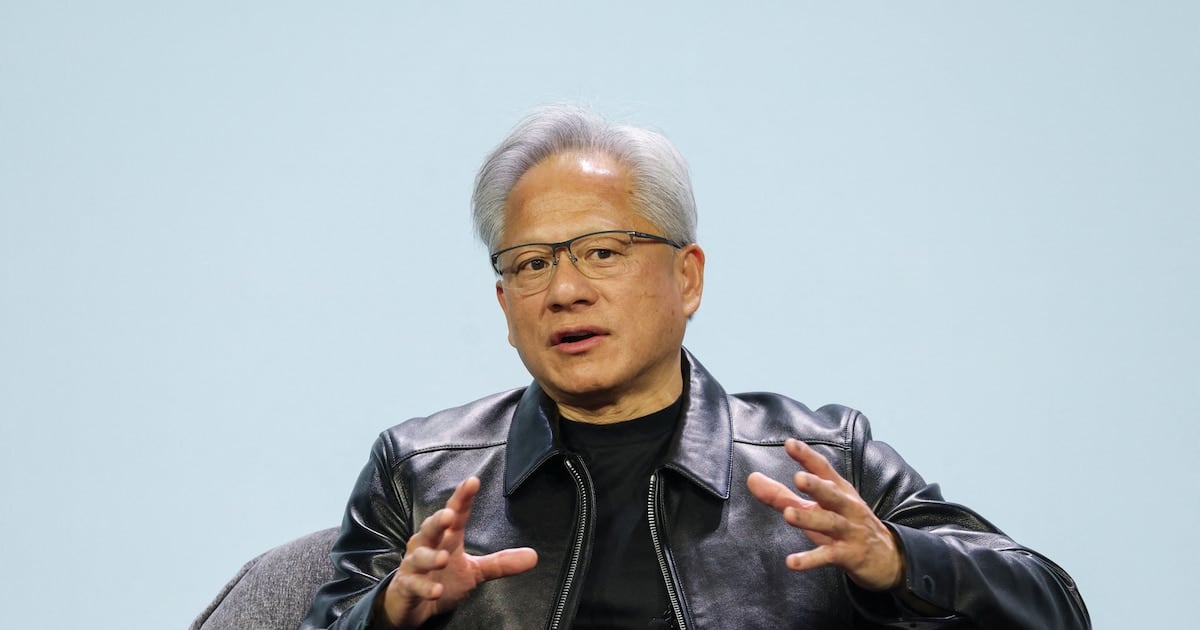
Knock, knock. Nvidia knocked on Europe's door with a USD 10.000 million commitment and a handful of promises that, this time, tried to materialize beyond the usual cycle of presentations and futuristic promises. The company founded by Jensen Huang closed its European tour at the GTC conference in Berlin, held between October 20 and 22, after passing through London, Paris, Stockholm and Dublin with agreements focused on robotics, computing infrastructure and the industrial adoption of artificial intelligence.
The most tangible of those announcements involves Agile Robots, a German company that plans to manufacture between 1,000 and 2,000 small humanoid robots next year together with Nvidia. Its chief executive, Zhaopeng Chen, confirmed that production will begin before the end of this year. It is a concrete step, although the scope is still limited compared with the broad horizon that usually accompanies announcements in this industry, whose history has been marked by an accelerated race to turn science fiction into products.
On infrastructure, Nvidia introduced the DSX POD, a new data center module built on its Vera Rubin platform. According to the company, this format can be installed in just two weeks, instead of the six months normally required for this kind of infrastructure. If that promise holds in real deployment, it could represent one of the most significant differences in the race to expand artificial intelligence: not only the availability of chips, but also the time needed to put computing capacity into operation.
Robots, duck dances and a German industrial alliance
During the Berlin conference, Huang shared the stage with small duck-shaped robots developed by the French startup Pollen Robotics in collaboration with Hugging Face. He asked them to perform pirouettes in front of the audience as a demonstration of their capabilities. Behind the playful spectacle there was a more serious message: artificial intelligence is moving beyond the screen and beginning to take physical form, even if the best-known demonstration still fits in the palm of a hand.
Germany also hosted an agreement between its government and Nvidia to accelerate the adoption of artificial intelligence in industry. Chancellor Friedrich Merz and Huang presented an initiative involving around ten established companies, including Siemens and Audi, together with the startup Black Forest Labs. According to the German government, hundreds of millions of euros will be allocated mainly to purchase computing capacity from Deutsche Telekom's industrial cloud, equipped with Nvidia Blackwell chips.
- Nvidia committed nearly USD 10.000 million to Europe's technology ecosystem during its European tour.
- Agile Robots plans to manufacture between 1,000 and 2,000 small humanoid robots next year with Nvidia.
- The DSX POD data center module can be installed in two weeks, according to the company, compared with the usual six months.
- Around ten companies will participate in the German industrial artificial intelligence initiative, backed by hundreds of millions of euros.
Yet Europe's path is not without obstacles. A September survey of 603 companies by the German digital association Bitkom found that 45 percent of respondents fear that the use of third-party artificial intelligence tools could put their commercial data at risk. That concern adds another layer to a continent that has competitive advantages in sectors such as precision mechanics, but still lacks its own players on the scale of the major United States laboratories.
For my money, the Nvidia tour confirms a trend that has been building for years: the artificial intelligence race is no longer measured only by model parameters or chip performance, but also by factories, data centers, industrial clouds and the time it takes to deploy them. The challenge for Europe will be to translate its industrial tradition into a leading role without giving up on the security and control of the information that supports that industry.
“Europe has advantages in sectors such as precision mechanics, but the continent still does not have its own players on the scale of the large United States laboratories.”Jensen Huang
My recommendation is to follow these announcements with attention, but also with a critical eye: watch whether the robots reach production, whether the two-week installation becomes a reality and whether the German initiative creates capabilities that remain in Europe. In technology, promises age quickly; results, if they arrive, tend to tell a fuller story. That is why, in this new chapter, I would keep the champagne on standby and the analysis closer at hand.